Shea Nilotica stands out not only for its superior physical and chemical properties but also for its role in supporting sustainable economic development in East Africa. Its cultivation and use highlight a successful intersection of traditional practices and modern economic needs, promoting both environmental sustainability and community well-being. This shea subspecies represents an exemplary model of how local resources, when managed sustainably, can contribute to global beauty industries while fostering local economies.
Introduction to Shea Nilotica:
Botanical and Ecological Profile:
Shea Nilotica, a subspecies of the shea tree known scientifically as Vitellaria paradoxa nilotica, is distinctive in its properties and ecological preferences compared to other shea subspecies. Predominantly found in the East African region, particularly northern Uganda, it is adapted to a different climatic zone which imparts unique characteristics to its yield.
While shea trees are commonly associated with West Africa, Shea Nilotica is native to the drier savannahs of East Africa. This geographical distinction affects not only the ecological aspects of the tree but also the socio-economic fabric of the regions in which it grows.
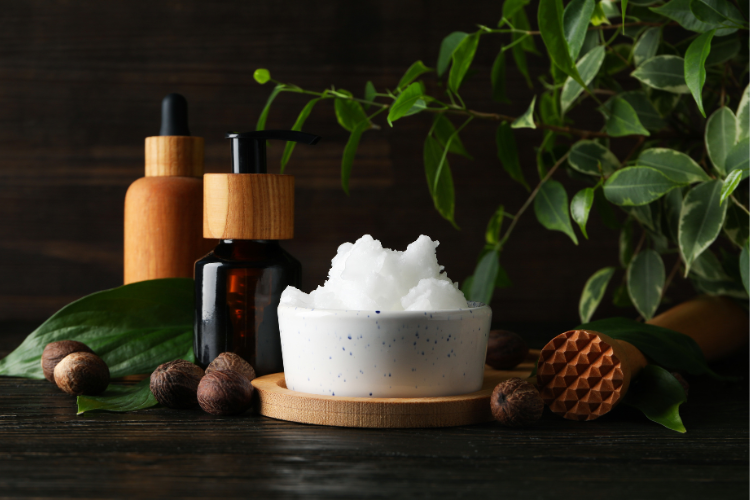
Shea Nilotica is known for its softer, creamier, and richer texture in comparison to its West African counterpart. This is due to its higher olein content, which makes the butter more spreadable and hydrating, characteristics highly valued in the cosmetics industry. The butter extracted from Shea Nilotica nuts is lighter in color and has a less pronounced smell, making it more desirable for use in high-end beauty products and skin care formulations.
The methods of harvesting and processing Shea Nilotica also differ. Traditionally, the nuts are collected from naturally occurring trees in the wild, rather than from plantations. This sustainable harvesting method supports the preservation of biodiversity and provides a critical income source for local communities, particularly women, who are primarily involved in the collection and processing of the nuts.
In northern Uganda and other East African regions, Shea Nilotica not only plays a crucial role in local biodiversity but also constitutes a significant aspect of local heritage and economy. The production of Shea Nilotica butter is a labor-intensive process that is deeply embedded in the local culture, providing economic empowerment to communities through its trade.
The environmental implications of cultivating and utilizing Shea Nilotica are profound. The trees help combat soil erosion, enhance soil fertility, and are an integral part of the agroforestry systems in East Africa. Their ability to thrive in arid conditions makes them invaluable for sustainable agricultural practices in regions susceptible to drought and desertification.
Cultural and Economic Importance:
In Northern Uganda, Vitellaria paradoxa nilotica is more than just a tree. It is a cornerstone of cultural identity, a source of economic empowerment, a contributor to health and nutrition, and a key player in the ecological health of the region. Preserving this valuable resource is not only about maintaining an income source but also about preserving a way of life and knowledge that has been passed down through generations. The shea tree, thus, represents a link between past, present, and future, embodying the resilience and sustainability of the communities that depend on it.
Traditionally, the tree is considered sacred, often preserved when other trees are cleared for agriculture. It serves multiple roles, from spiritual to practical, where local traditions and beliefs are woven around its existence. The tree is often planted on the graves of chiefs and is used in various ceremonial and ritual contexts.
The fruit of the shea tree is a source of food. The sweet pulp surrounding the nut is edible and consumed by children and adults alike, providing vital nutrition. This is especially significant in areas where food security is a constant concern. The nuts themselves are rich in fats and proteins, making them a substantial dietary addition.
Economically, shea butter extracted from the nuts of Vitellaria paradoxa nilotica is a significant livelihood resource. The process of harvesting, processing, and selling shea butter provides an essential source of income, primarily for women. This economic activity empowers women, giving them financial independence and a voice in their communities, which traditionally may not be prevalent.
The shea tree also has medicinal properties. Locals use shea butter to treat skin ailments and minor wounds, thanks to its anti-inflammatory and emollient properties. The bark and leaves of the tree are used in traditional medicine to treat various ailments, reinforcing its value beyond just economic.
Beyond its direct uses, Vitellaria paradoxa nilotica plays a vital role in environmental sustainability. The tree helps to stabilize the soil, prevent erosion, and maintain local biodiversity. It is a part of the agroforestry systems, where its presence supports the growth of other plants and maintains a balance in the local ecosystem.
Despite its importance, the shea tree faces challenges such as deforestation, land degradation, and the impacts of climate change. These challenges threaten the sustainability of the shea resource, prompting both local and international efforts to promote more sustainable practices and conservation efforts. Community-led initiatives are crucial in these conservation efforts, emphasizing the tree’s integral role in local traditions and livelihoods.
